
1) Whitemouth Municipal Museum
The Whitemouth Municipal Museum

Listen to recorded audio by clicking the audio button on the left.
The Dominion Land Survey refers to Whitemouth as early as 1877, at which time the Canadian Pacific Railway (CP Rail or CPR) right of way was being surveyed through the area from Winnipeg to Rat Portage (which in 1905 was renamed Kenora). The line was in operation with passenger service by 1880. The first station was built in 1886, and a second, larger one built in 1923. The CP Railway plays a large role in Whitemouth’s beginnings.
After the development of the railway, other establishments started to rise in the area. The first post office opened in 1880. The first hotel was built by G.D. Stinson in 1880. The first store or trading post was built by Howard Corregan on the south-east corner of Front Avenue and Main Street in the early 1880s. It became known as “Fort Howard”. (We will learn more about Fort Howard later in the tour). The first school was built in 1881 on Main Street. The first church, which was Presbyterian, was built the same year on Front Street. Both were built by David Ross, on land and with materials donated by him. The Rural Municipality of Whitemouth was incorporated in 1905.
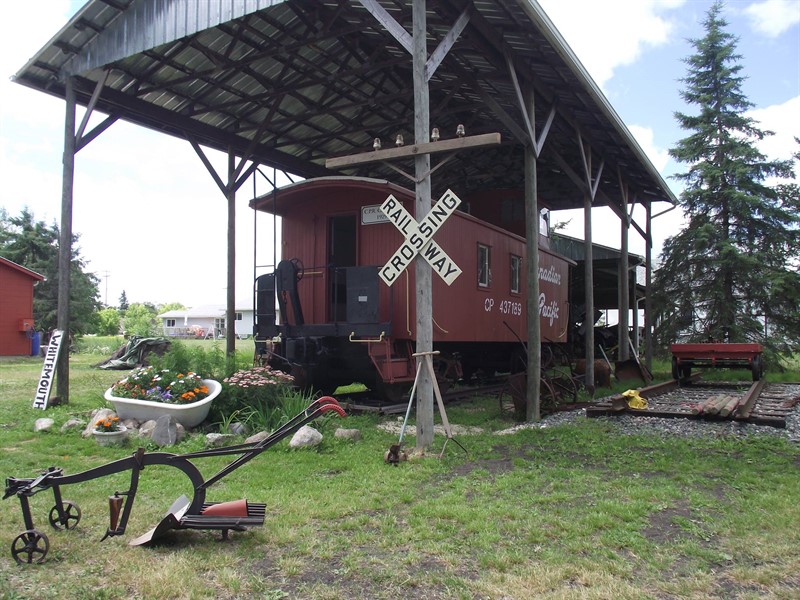
The idea of a museum was conceived in 1973 by a group of civic minded people. The museum opened in August 1974 with one log building donated by Manitoba Natural Resources. The museum's motto was, and still is "Preserve the past for future generations". Numerous buildings have been added over the years. Currently on site, resides a 110-year-old house and a Canadian Pacific Railway caboose, built in 1929. A large steel machinery storage shed was erected in 1979 and a wood artifacts and office building added in 1989. A clay bake oven was built in 1984, where bread and buns are baked each year during the Museum’s annual Heritage Day. The first Heritage Day was held in 1977, and still takes place each second Sunday in September. The event pays tribute to framings early beginnings from threshing to breadmaking. This event makes a fun outing for all.
The Whitemouth Municipal Museum published a very successful history book called "Trails to Rails to Highways" in 1979. The Trails to Rails to Highways book is still available for purchase. You can contact the Museum via email to purchase your very own copy.
In 1981, the museum was instrumental in the clean-up of the old municipal cemetery, and in 1982 dedicated a cenotaph commemorating those that fought in the war.
The Whitemouth Museum also has a dedicated memorial cairn honoring Dr. Charlotte Whitehead Ross (1843-1916). Dr. Charlotte Whitehead Ross belonged to the first generation of women to practice medicine in Canada and was Manitoba’s first qualified woman doctor. Dr. Charlotte Whitehead Ross practiced medicine in Whitemouth from 1881 to 1912. Her father, Mr. Whitehead and her husband, David Ross, helped build railways in the west. Through lumbering and other industries, the two of them aided the opening up of the country. After marrying Ross, Charlotte took responsibility for caring for her chronically ill sister Mary Anne, an experience that apparently stimulated her interest in medicine. She was encouraged to study medicine by her family physician, whom she borrowed several medical books from, despite the disapproval of her father. With the understanding that her husband's work on the railway out west would mean that her family would have little access to medical care, she decided to enroll at the Women's Medical College of Philadelphia in 1870, as no Canadian medical college was open to women at that time.
Charlotte came to Whitemouth in the summer of 1881 with her children, and treated her first patient the night after she arrived. Although qualified, she was not legally allowed to practice medicine. She defied the so-called establishment and got on with her work. Charlotte's early patients were mostly men, unusual for a female doctor at the time, which was mainly due to the logging industry around Whitemouth and the results of logging accidents that would occur. Many of these initial procedures involved Charlotte using her surgeon's skills, amputating legs, stitching wounds and setting broken bones due to the many lumber or axe related injuries to the legs or feet. Her strength, will and dedication helped forge a heritage which is alive and well in the region. Fred Edge wrote a book titled “The Iron Rose: The Extraordinary Life of Charlotte Ross, MD ”. The book highlights the life of the doctor and was published in 1992, with the University of Manitoba Press.
In 2001, Whitemouth's historic Christ Anglican Church, was moved to the Museum grounds. This church, originally located on Elevator Road was built in 1904 and 1905. The first service was held on August 22, 1905. It was hand built by local parishioners on donated land, from local lumber, on a Tyndall limestone foundation. The original bell tower was destroyed in a windstorm in 1922 and was not replaced. The church was active from 1905 to 1923. No services were held until 1930, when the congregation was revived. The church saw continuous services until Christmas of 1995, when the congregation became too small to sustain itself. The owners, the Diocese of Keewatin, donated the building to the Whitemouth Museum Society, and it was moved on site and refurbished.
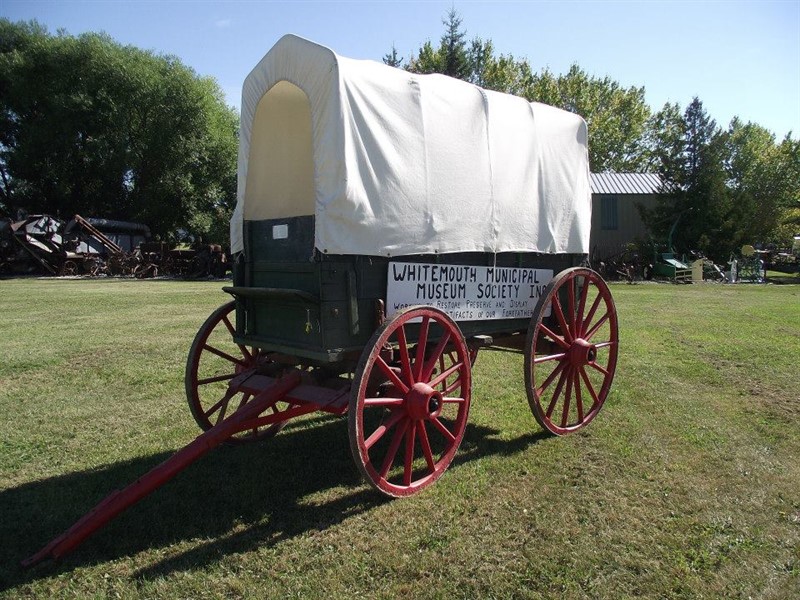
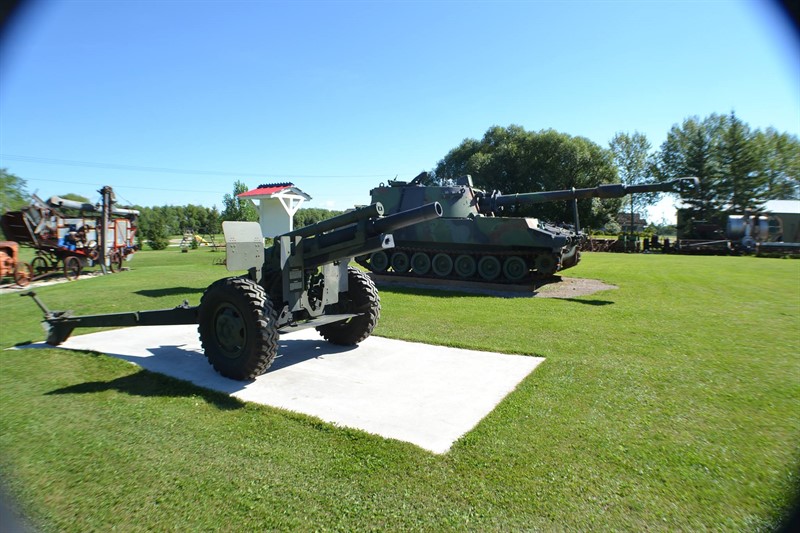
Today, the museum boasts a 1929 train caboose that families can explore, a large antique farm machinery collection, a pioneer house dating to 1909, a large artifact building, a blacksmith shop and a log trapper's cabin. All except the caboose are wheelchair accessible. We encourage you to plan a trip and visit this special gem in our community. To learn more and confirm hours, please check out their website.
North of the Museum you will also see the Whitemouth & District Lions Club Campground & Park. This is a popular location by tourist and locals alike and includes a playground, washrooms, picnic shelter, fire pits, and more. Camping is free, although donations are greatly appreciated. We encourage you to visit the Park and check out the beautiful mural on the Picnic Hut, hand painted by local artists and community members. The Lion’s Campground also connects to the Co-op Community Trail. Along the trail you can find many mosaic art pieces and resting spots to sit and enjoy the view of the community grounds. The creation of this trail was done in partnership with many local business and organizations, with local artists and community members assisting with the artwork along the trail.
Additional Details
Civic Number: 62 Henderson Ave., Whitemouth (access to parking lot)
Amenities on Site: Wheelchair Accessible; Indoor & Outdoor Museum Artifacts; Washroom Facilities (At Lion's Park) l Buildings on Site: Yes
 |
 |
 |
| Photo curtesy of Whitemouth Museum |
Photo curtesy of Whitemouth Museum |
Photo curtesy of Whitemouth Museum |